latest news
View more
How to choose cost-effective mining equipment by paying attention to details?
Time:2026-01-14
Author:
In various complex and extreme working environments, selecting a mining machine with superior performance and an appropriate price is of utmost importance. The market offers a wide array of equipment with varying quality levels. Users often focus only on superficial aspects when choosing equipment, unaware that product quality often lies in the details, such as casting, welding, hot riveting processes, and more. These invisible yet crucial processes are frequently overlooked by users. Today, let's delve into the process knowledge involved in the processing and manufacturing at Zhenggang Machinery.
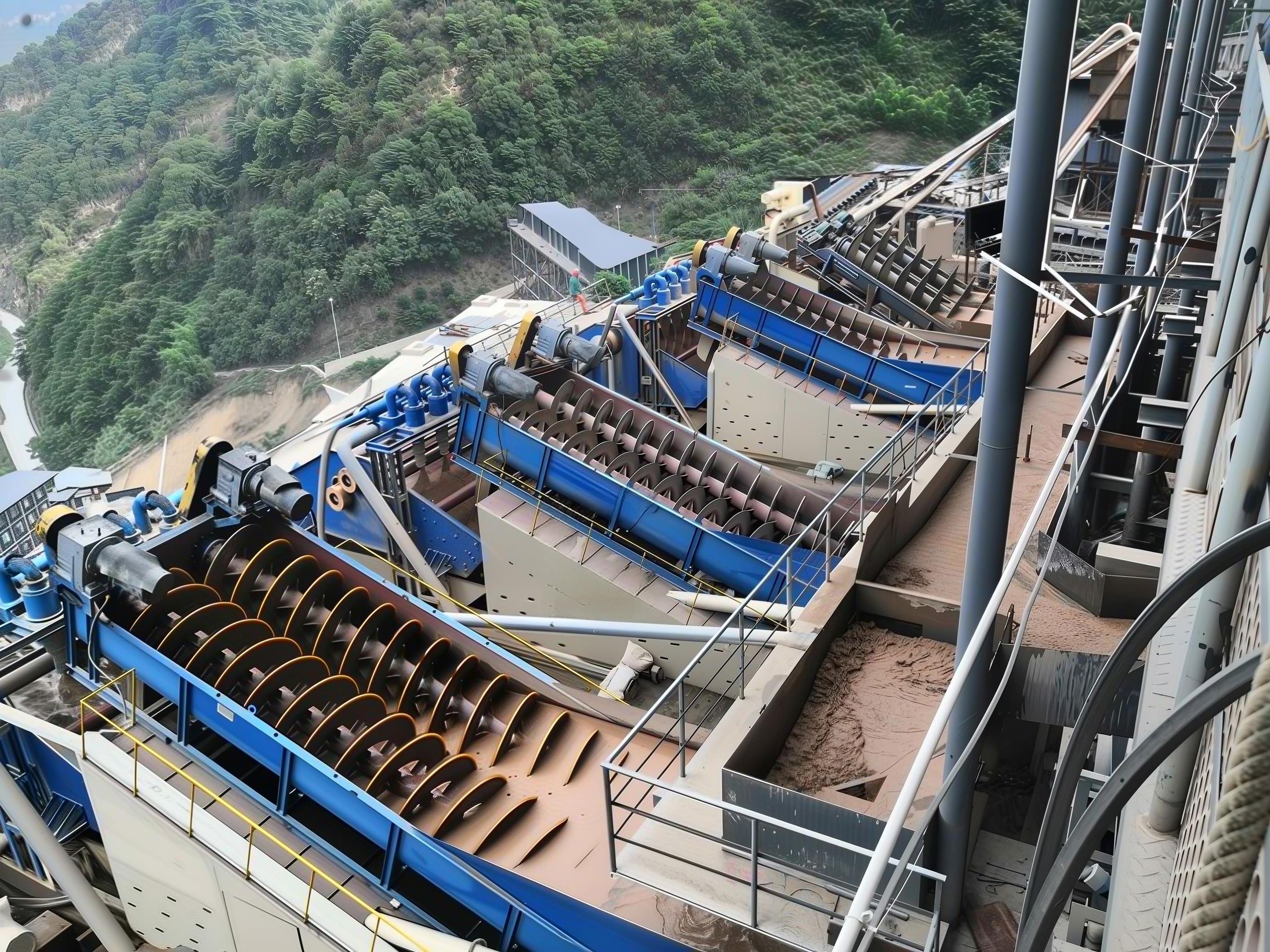
1. Casting and Welding
Casting is a processing technique where molten metal, after being smelted, is poured or drawn into a pre-prepared casting mold. After cooling, it undergoes processes such as shakeout, cleaning, and post-treatment to yield an object with specific appearance, dimensions, and properties. Welding, on the other hand, is an operation method that joins two or more workpieces into a single entity using welding rods or wires under high-temperature or high-pressure conditions. Due to its monolithic construction, casting generally outperforms welding in terms of overall performance and service life.
2. Hot Riveting Process
Hot riveting is a processing technique that deforms and even melts the connecting parts of two metals together by increasing the temperature, involving the riveting of heated rivets to a certain temperature. Products processed with hot riveting exhibit better plasticity and a more secure connection between the rivets and the plates.
3. Heat Treatment and Cold Treatment of Steel
Heat treatment refers to a metal thermal processing technique where a material is heated, held at a certain temperature, and then cooled within a specific medium to alter its surface or internal microstructure, thereby achieving desired properties. There are two common types of heat treatment: ordinary heat treatment and surface heat treatment.
Cold treatment is a process that involves quenching the material to room temperature and immediately placing it in an environment below room temperature for a certain period, followed by returning it to room temperature to improve the properties of the metal material. It is closely linked to heat treatment and serves as a further continuation of it. For cold treatment of bearing steel at Hongxing Machinery, refrigerators and dry ice-alcohol solutions are typically used, resulting in high product stability and hardness.
4. Thin Oil Lubrication and Grease Lubrication
Thin oil: Commonly used lubricating oils, such as mineral oils and synthetic oils, are liquid and also known as thin oils. Lubrication using thin oils is referred to as thin oil lubrication. Its primary functions include lubrication, heat dissipation, and the removal of excess debris.
Grease: Commonly used lubricating greases are semi-solid plastic lubricants, also known as grease. Lubrication using grease is called grease lubrication. Its main functions are lubrication and sealing to prevent dust ingress.
The devil is in the details. Although equipment from different manufacturers may appear similar in appearance, there can be significant differences in the choice of manufacturing processes and product pricing. Users must gather detailed information when making a purchase to avoid unnecessary troubles during subsequent production.
Equipment Knowledge
View more
2026-01-14
2026-01-14
Best Sellers
View more products