latest news
View more
What is density-based stratification and separation equipment?
Time:2026-01-14
Author:
Density-difference stratification gravity separation equipment represents a category of mineral processing devices that utilize the density disparities among mineral particles to achieve stratified separation in specific media (such as water, air, or dense media) through gravity, centrifugal force, or media action. The core principle involves creating an appropriate separation environment to induce differences in settling velocities among mineral particles of varying densities during motion, thereby enabling their separation. Here is a detailed introduction: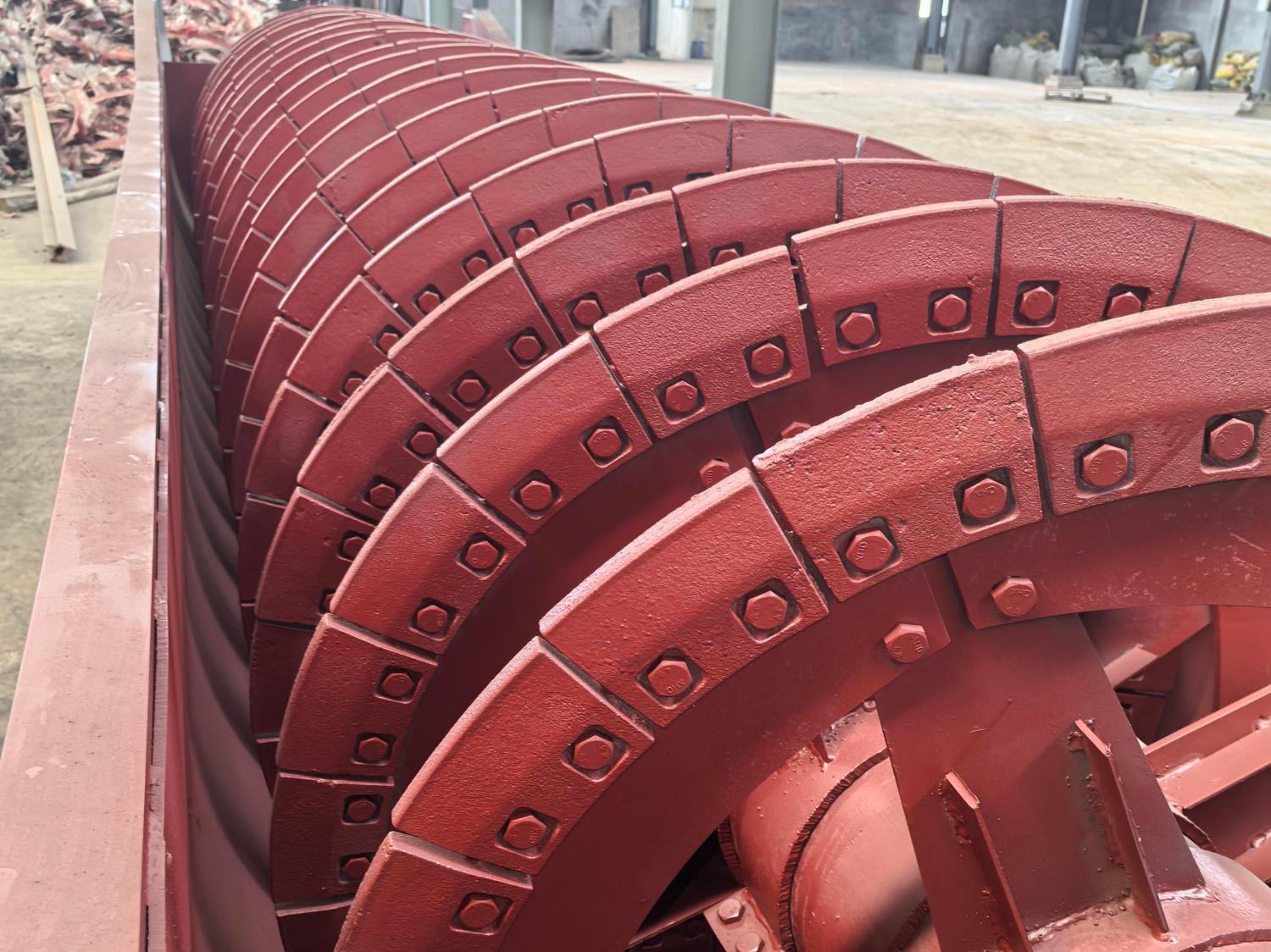
I. Working Principle
1. Stratification Based on Density Differences:
- Mineral particles are subjected to gravity, buoyancy, and drag forces in the medium, with their settling velocities being influenced by density, particle size, and medium properties.
- Heavier particles settle faster and preferentially deposit at the bottom of the separation equipment or near the discharge outlet, while lighter particles settle slower and are carried by the medium flow to the tailings end.
2. Design of Separation Environment:
- The impact of density differences on separation can be enhanced by adjusting equipment structure (such as bed inclination angle, spiral chute pitch) or operational parameters (such as vibration frequency, centrifugal force).
- Optimization of medium properties (such as density, viscosity) can further improve separation efficiency.
II. Typical Equipment Types
1. Jig Machine
- Principle: Utilizes periodically pulsating water flow to stratify mineral particles based on density.
- Heavy minerals rapidly settle to the bottom of the jig chamber, while light minerals float on the upper layer.
- Concentrates and tailings are collected separately through discharge devices (such as valves or screens).
- Characteristics:
- Simple structure with a high processing capacity (up to several hundred tons per hour).
- Suitable for separating ores with a wide range of particle sizes (0.5-30mm).
- Sensitive to density differences, commonly used for pre-concentration of metal ores such as tungsten, tin, and iron.
2. Shaking Table
- Principle: Achieves stratification of mineral particles based on density and particle size through reciprocating motion of the table surface and lateral water flow.
- Heavy minerals move longitudinally along the table surface to the concentrate end, while light minerals are washed to the tailings end by water flow.
- Grooves or stripes on the table surface enhance stratification effects.
- Characteristics:
- High separation accuracy, capable of producing high-grade concentrates (e.g., gold concentrate grades exceeding 90%).
- Suitable for fine-grained ores (0.037-2mm).
- Flexible operation with adjustable parameters to optimize separation effects.
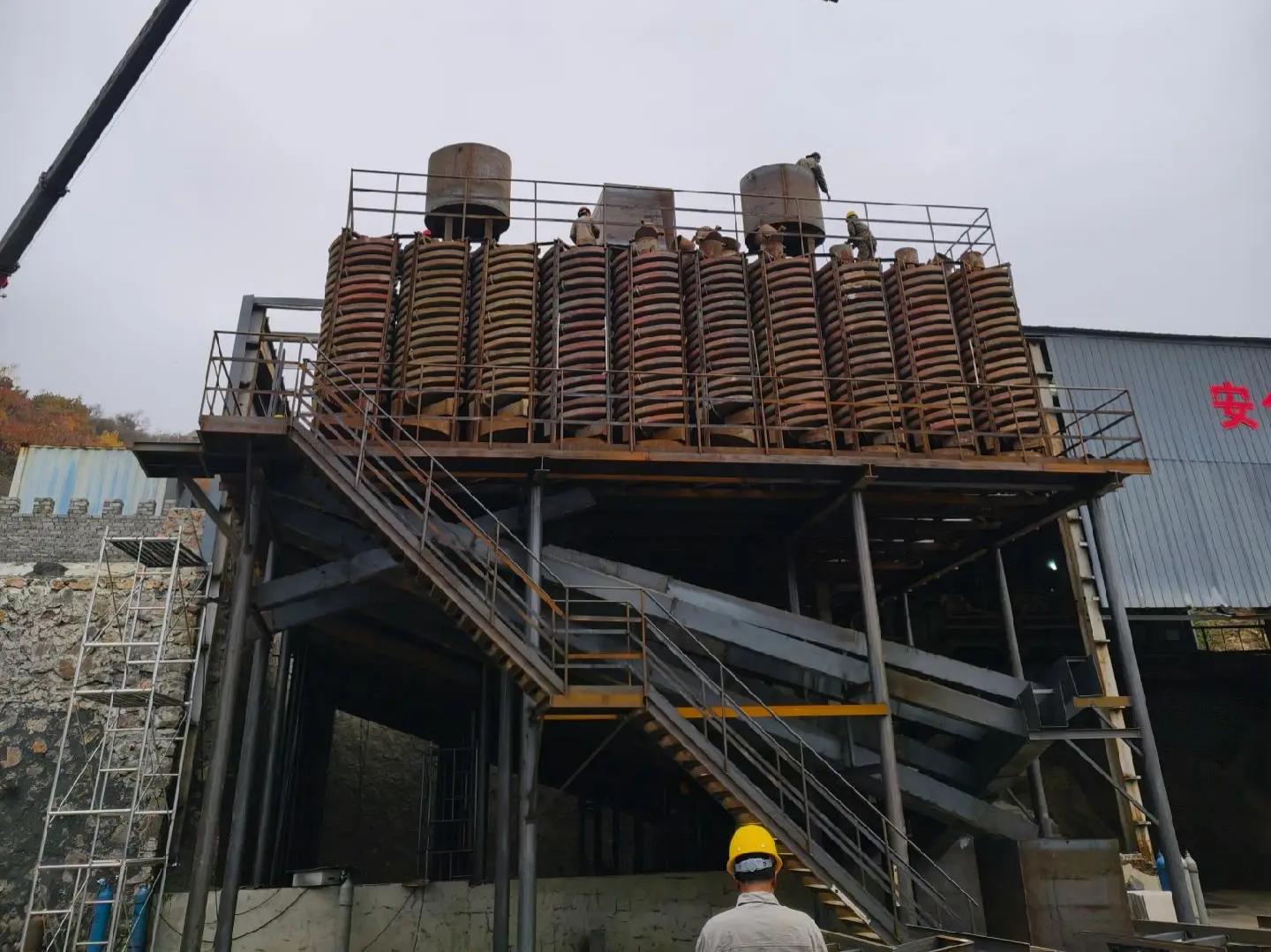
3. Spiral Chute
- Principle: Utilizes differences in centrifugal force, gravity, and friction force among minerals during rotational flow in a spiral chute to achieve stratification.
- Heavy minerals move along the inner wall of the chute, while light minerals flow outward.
- Multiple spiral turns extend the separation path to improve recovery rates.
- Characteristics:
- Simple structure with no power consumption and low operating costs.
- Suitable for medium to fine-grained ores (0.06-3mm).
- Commonly used for separating metal ores such as iron, titanium, and chromium, as well as recovering gold and platinum.
4. Centrifugal Concentrator
- Principle: Enhances stratification based on density differences through centrifugal force generated by high-speed rotation.
- Heavy minerals rapidly settle to the inner wall of the rotating drum, while light minerals are discharged.
- Concentrates are discharged through backflushing water to achieve continuous separation.
- Characteristics:
- High separation efficiency and recovery rates (especially suitable for microfine-grained minerals).
- Large processing capacity with a small footprint.
- Commonly used for recovering precious metals such as gold and silver, as well as concentrating tungsten and tin.
5. Dense Medium Separator
- Principle: Uses a dense medium (such as a magnetite powder suspension) with a density greater than water as the separation medium.
- Mineral particles stratify in the medium based on density, with heavy minerals sinking and light minerals floating.
- The dense medium is recovered through screening or magnetic separation for recycling.
- Characteristics:
- High separation accuracy with the ability to process ores with a wide range of particle sizes (0.5-100mm).
- Suitable for separating minerals with small density differences (such as coal and gangue).
- Requires a配套 (supporting) dense medium recovery system, resulting in higher operating costs.
III. Application Scenarios
- Metal ore beneficiation: tungsten, tin, iron, manganese, tantalum-niobium, gold, silver, etc.
- Non-metallic mineral purification: coal, graphite, quartz sand, etc.
- Precious metal recovery: placer gold mines, platinum group metal mines, etc.
- Pre-concentration and concentration: used as roughing equipment to improve feed grade or as concentrating equipment to obtain final concentrates.
IV. Advantages and Limitations
Advantages:
- Environmentally friendly and energy-efficient: no chemical reagents required, making it environmentally friendly.
- Low cost: simple equipment structure with easy maintenance.
- Strong adaptability: capable of processing ores with various particle sizes and densities.
Limitations:
- Limited lower particle size limit for separation (typically >0.03mm).
- High requirement for density differences among minerals (generally >0.5g/cm³).
- Separation efficiency for fine-grained ores may be lower than that of flotation or chemical beneficiation methods.
Equipment Knowledge
View more
2026-01-14
2026-01-14
Best Sellers
View more products