latest news
View more
What are the differences between dry ball mills and wet ball mills, and how do you choose between th
Time:2026-01-15
Author:
Dry and wet ball mills are core equipment in grinding processes, with their primary distinction lying in the medium state (dry vs. wet) and application scenarios. Selection requires comprehensive consideration of ore properties, process objectives, environmental requirements, and costs. Below is a detailed comparison and selection guide.
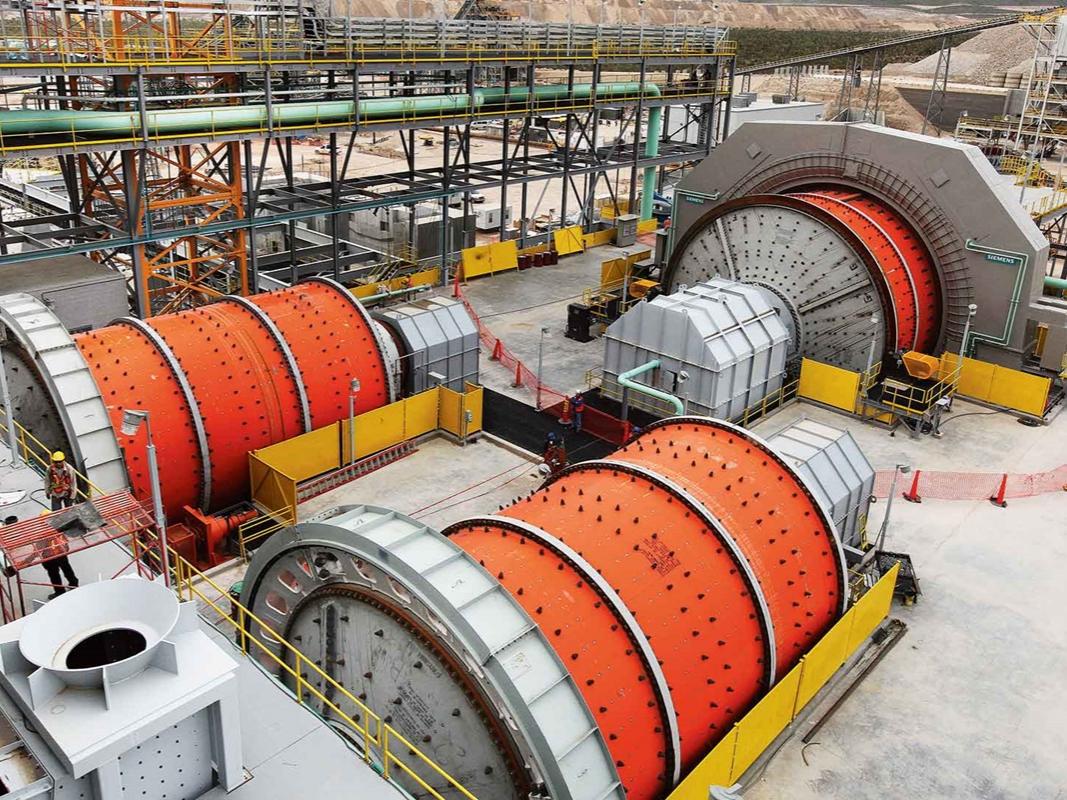
I. Core Differences: Medium State and Process Principles
| Comparison Dimension | Dry Ball Mill | Wet Ball Mill |
|---|---|---|
| Medium State | Air or inert gas (e.g., nitrogen) as dispersing medium | Water or other liquids as dispersing medium |
| Grinding Mechanism | Direct collision and friction between material and grinding media | Impact and shear forces on material in liquid medium |
| Product Form | Dry powder (moisture content <5%) | Slurry (solid-liquid mixture, concentration typically 30%–70%) |
| Typical Applications | Dry processes for refractory materials, cement, fertilizers, etc. | Wet processing for metal/non-metal ores, chemical raw materials |
II. Performance Comparison: Efficiency, Energy Consumption, and Environmental Impact
1. Grinding Efficiency
- Dry Ball Mill:
- Advantages: Higher efficiency for hard, brittle ores (e.g., iron ore, quartz sand) due to reduced "cushioning effect" from moisture.
- Limitations: Prone to over-grinding (excessive fines) and clogging of grinding media gaps by dust, requiring frequent cleaning.
- Example: An iron ore processing plant using a dry ball mill achieved a 10% shorter grinding time but 15% over-grinding rate for magnetite.
- Wet Ball Mill:
- Advantages: Liquid medium reduces material temperature, minimizing thermal degradation of heat-sensitive materials (e.g., certain non-metal ores); extends equipment lifespan by reducing grinding media wear.
- Limitations: "Ball sticking" may occur with sticky materials, necessitating dispersants to improve flowability.
- Example: A copper mine processing plant using a wet ball mill for sulfide ore improved grinding efficiency by 20% and extended grinding media lifespan by 30%.
2. Energy Consumption
- Dry Ball Mill:
- Requires additional dust collection systems (e.g., bag filters), increasing energy consumption by 10%–15%.
- Higher unit energy consumption (5%–10% more than wet milling) due to greater friction in dry grinding.
- Wet Ball Mill:
- Liquid medium lubricates contact surfaces, reducing friction and lowering unit energy consumption.
- Requires energy for subsequent dewatering (e.g., thickeners, filters) to process slurry.
3. Environmental Performance
- Dry Ball Mill:
- High dust emissions necessitate rigorous sealing and efficient dust collection systems to prevent air pollution.
- Suitable for moisture-sensitive materials (e.g., certain fertilizer raw materials) to avoid caking during wet processing.
- Wet Ball Mill:
- Near-zero dust emissions, offering significant environmental advantages.
- Wastewater requires treatment to meet discharge standards, potentially increasing costs (e.g., sedimentation tanks, treatment equipment).
III. Selection Criteria: Ore Properties and Process Objectives
1. Selection Based on Ore Properties
- Dry Ball Mill Applications:
- Hard, brittle ores: E.g., iron ore, quartz sand, cement clinker, where dry grinding is more efficient.
- Moisture-sensitive materials: E.g., certain fertilizer raw materials, refractory materials, where wet processing causes caking or degradation.
- Flammable/explosive materials: E.g., coal powder, sulfur, requiring inert gas (e.g., nitrogen) protection during dry grinding.
- Wet Ball Mill Applications:
- Metal ore beneficiation: E.g., copper, lead, zinc, gold sulfide or oxide ores, where wet grinding enhances monomer dissociation.
- Non-metal ore deep processing: E.g., kaolin, talc, mica, where wet grinding controls particle size distribution and improves whiteness.
- Chemical raw material preparation: E.g., pigments, coatings, ceramic materials, where wet grinding avoids dust pollution and enhances product uniformity.
2. Selection Based on Process Objectives
- High efficiency and low cost:
- Choose dry ball mills for hard ores with low moisture sensitivity (e.g., cement industry).
- Choose wet ball mills for precise particle size control or improved mineral dissociation (e.g., metal ore beneficiation).
- Environmental protection and product quality:
- Wet ball mills are preferred for stringent environmental regulations (e.g., food/pharmaceutical-grade raw material processing) due to low dust and uniform product quality.
- Dry ball mills require high-efficiency dust collection systems to meet standards, increasing initial investment.
- Integration with downstream processes:
- For dry separation (e.g., magnetic separation, pneumatic separation), dry ball mills avoid moisture interference.
- For wet separation (e.g., flotation, gravity separation), wet ball mills simplify processes by directly feeding slurry.
IV. Typical Case Studies
Case 1: Gold Mine Processing Plant
- Material: Gold-bearing sulfide ore (medium hardness, <8% moisture).
- Selection: Wet ball mill.
- Rationale:
- Wet grinding improved gold monomer dissociation, boosting flotation recovery from 85% to 92%.
- Eliminated dust pollution, reducing health risks for workers.
- Slurry could be directly fed to flotation cells, streamlining the process.
Case 2: Cement Plant
- Material: Limestone, clay (high hardness, requiring dry grinding).
- Selection: Dry ball mill.
- Rationale:
- Dry grinding offered higher efficiency, with 8% lower energy consumption per unit output than wet milling.
- Cement production requires dry powder raw materials; wet grinding would necessitate additional drying steps.
- After installing pulse bag filters, dust emissions were reduced to <10 mg/m³, meeting environmental standards.
V. Summary: Selection Principles
- Prioritize ore properties: Choose dry milling for hard, brittle ores; wet milling for metal/non-metal ores.
- Align with process objectives: Opt for dry milling for efficiency; wet milling for environmental protection and product quality.
- Evaluate costs comprehensively: Dry milling has lower initial investment but higher operational costs (dust collection); wet milling has higher upfront costs but lower long-term energy use.
- Ensure environmental compliance: Prioritize wet milling in regions with strict emission standards, or equip dry mills with high-efficiency dust collection systems.
By scientifically matching equipment with processes, grinding operations can achieve high efficiency, low energy consumption, and environmental sustainability, providing high-quality raw materials for downstream separation or deep processing.

Equipment Knowledge
View more
2026-01-14
2026-01-14
Best Sellers
View more products