

- output:3.1-220m³/h
- Feed size:Overflow size20-120μm
- Motor power:/
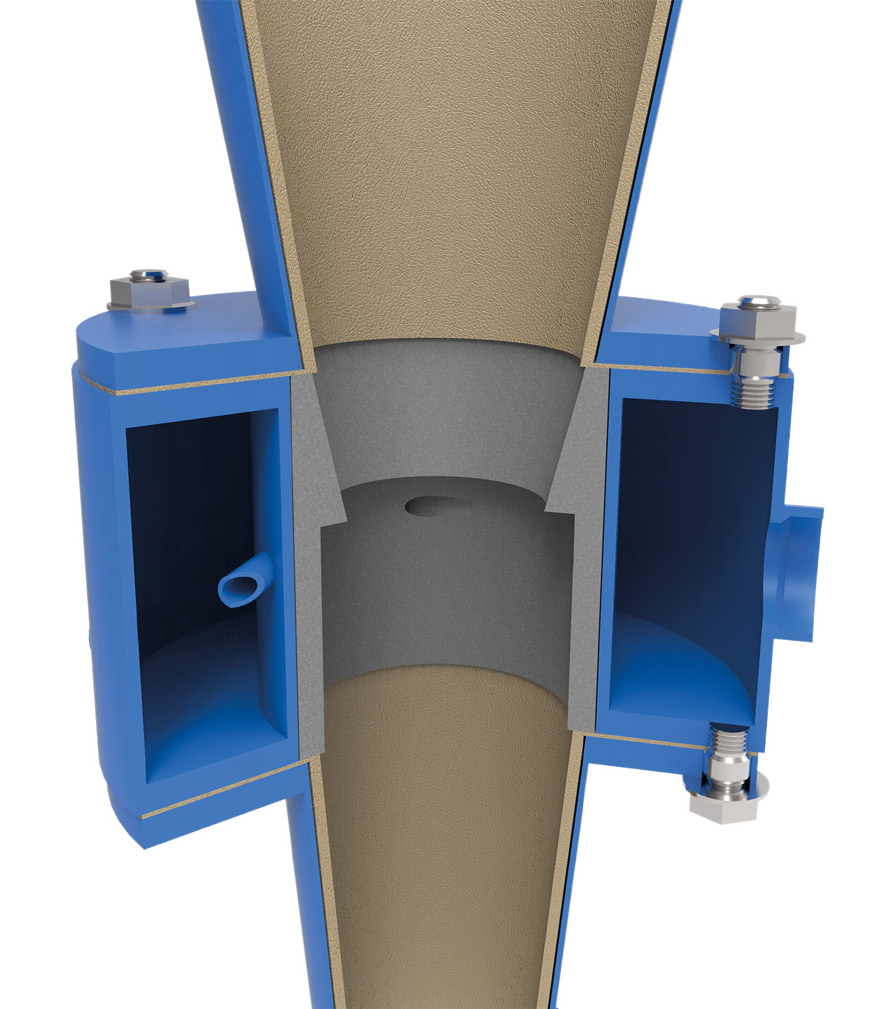


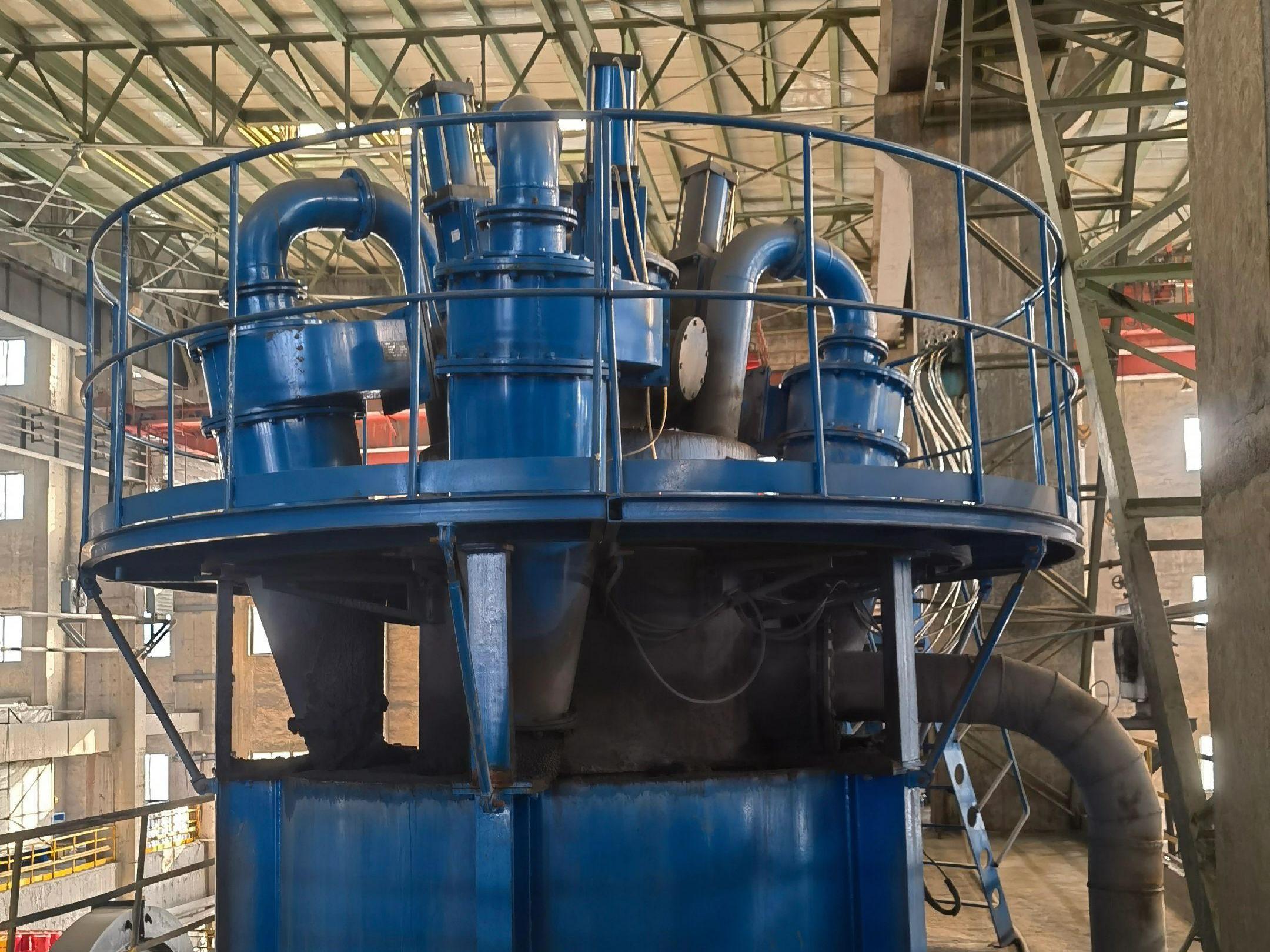
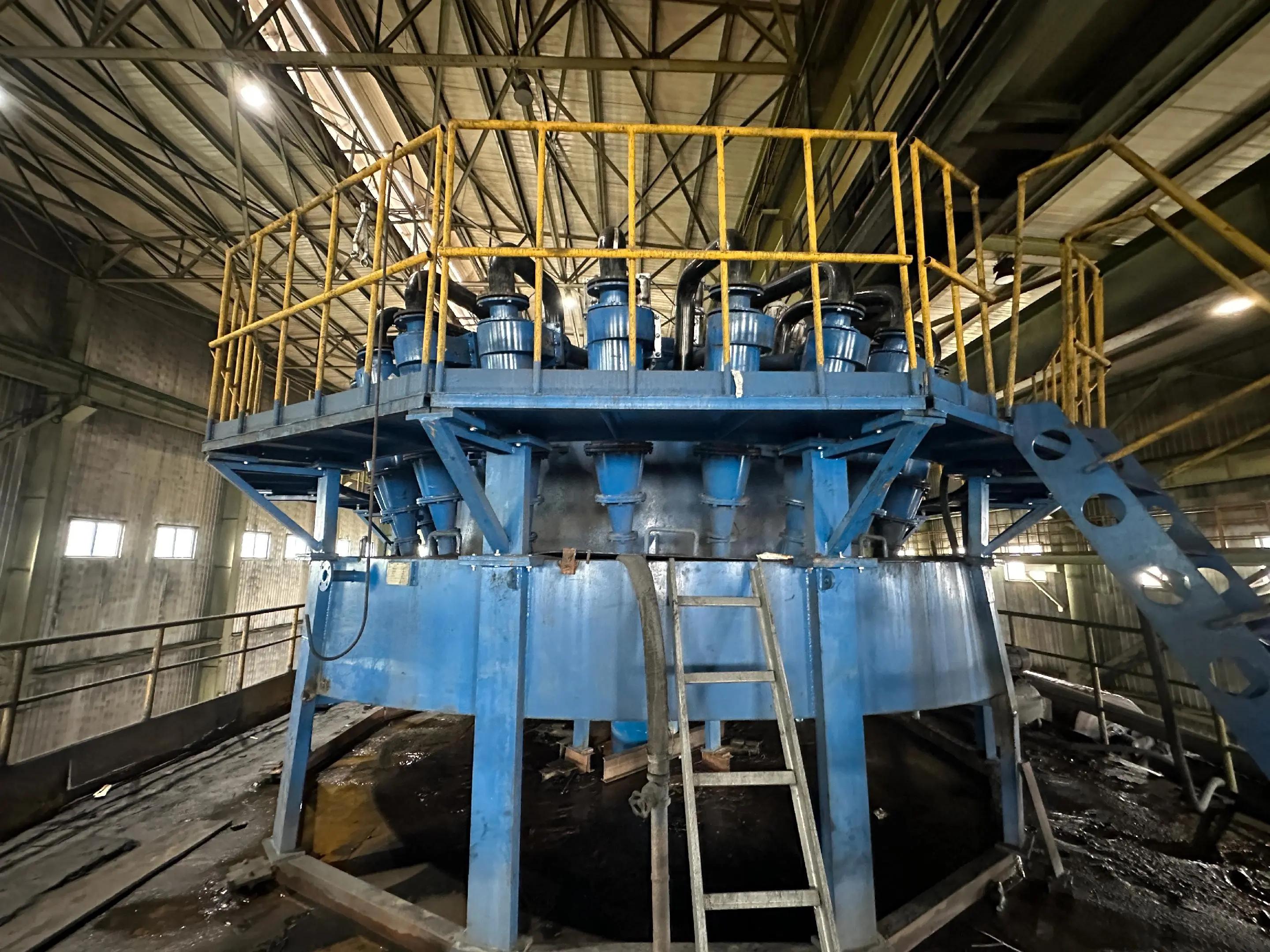
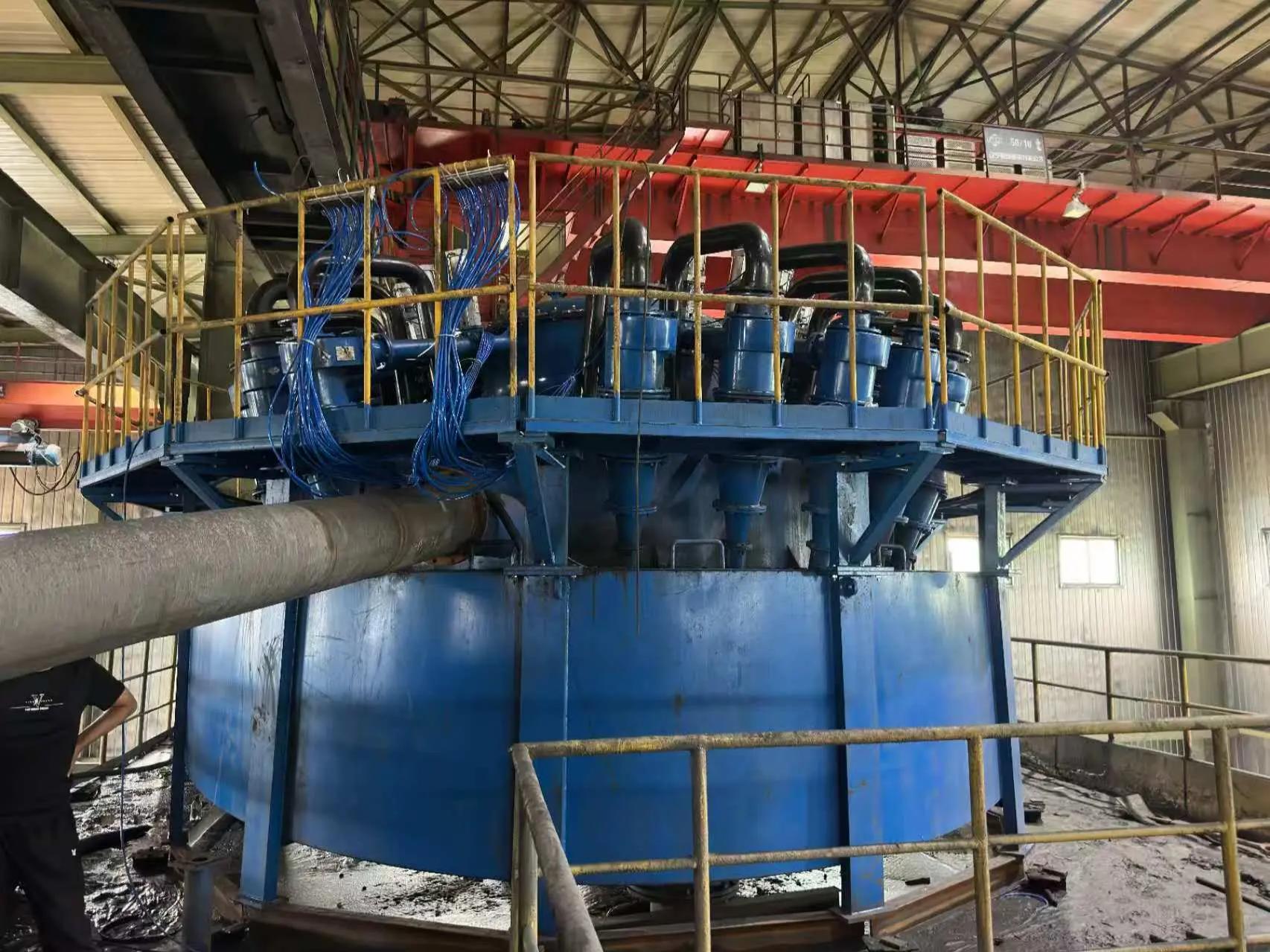
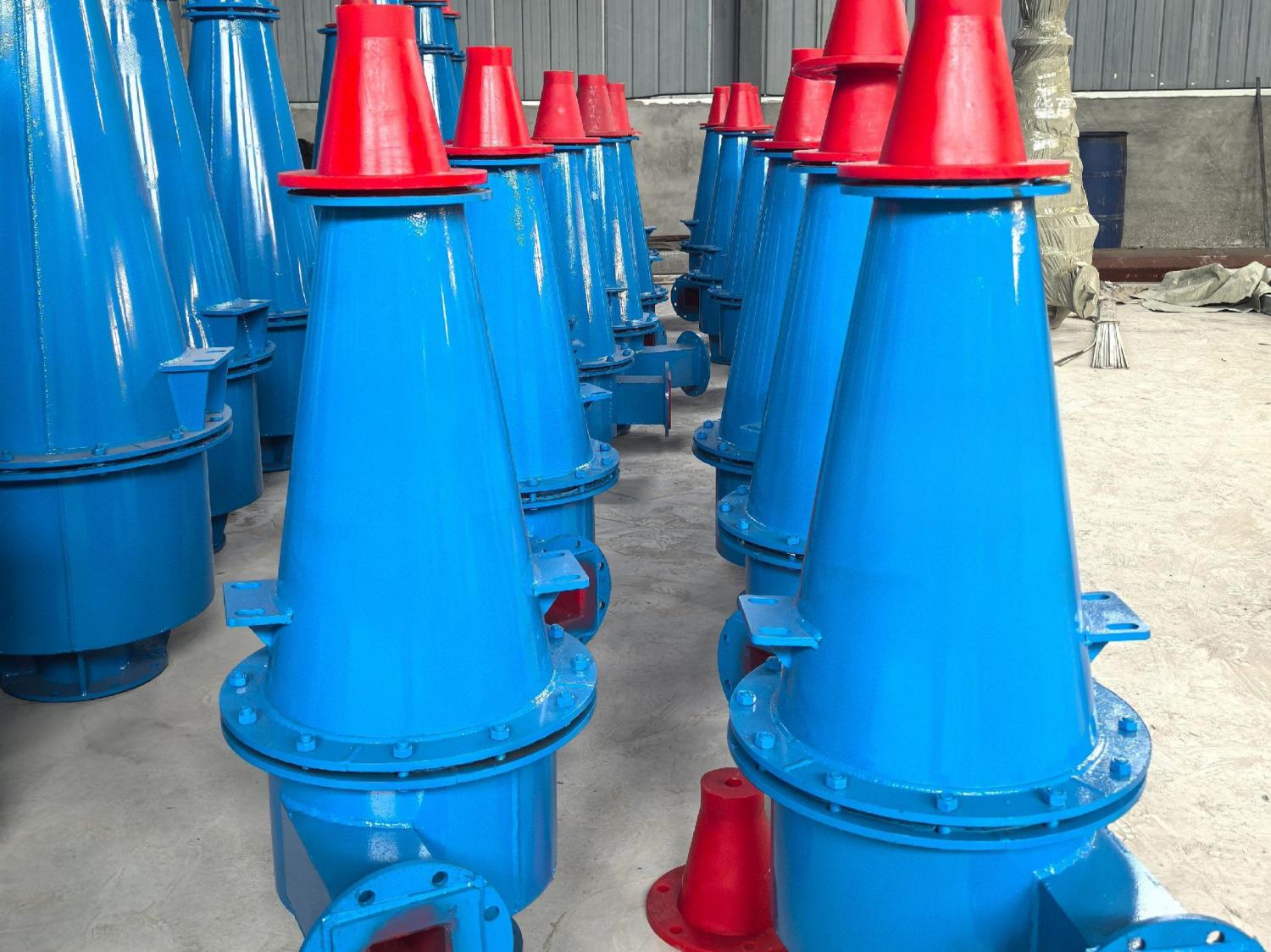
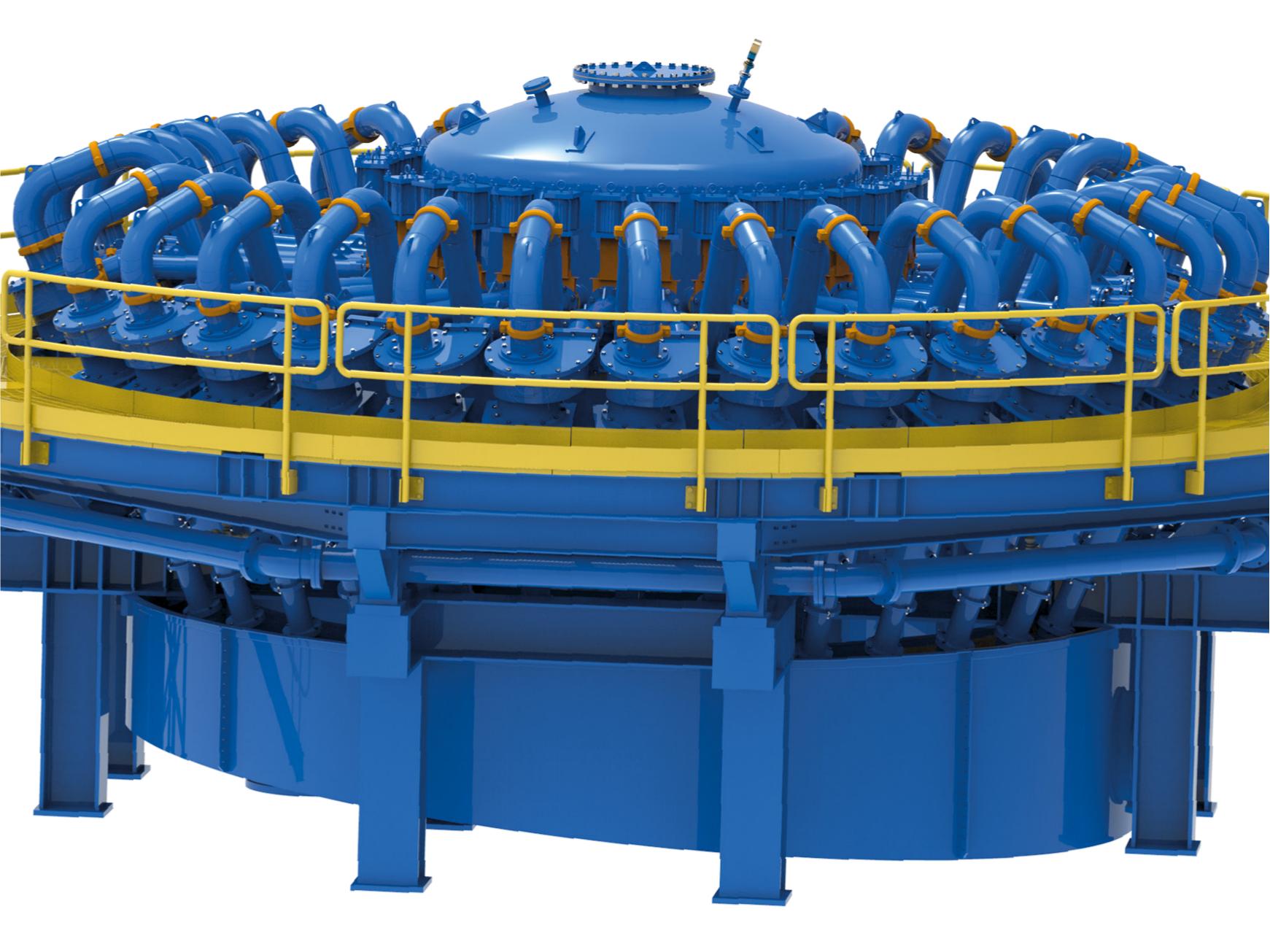
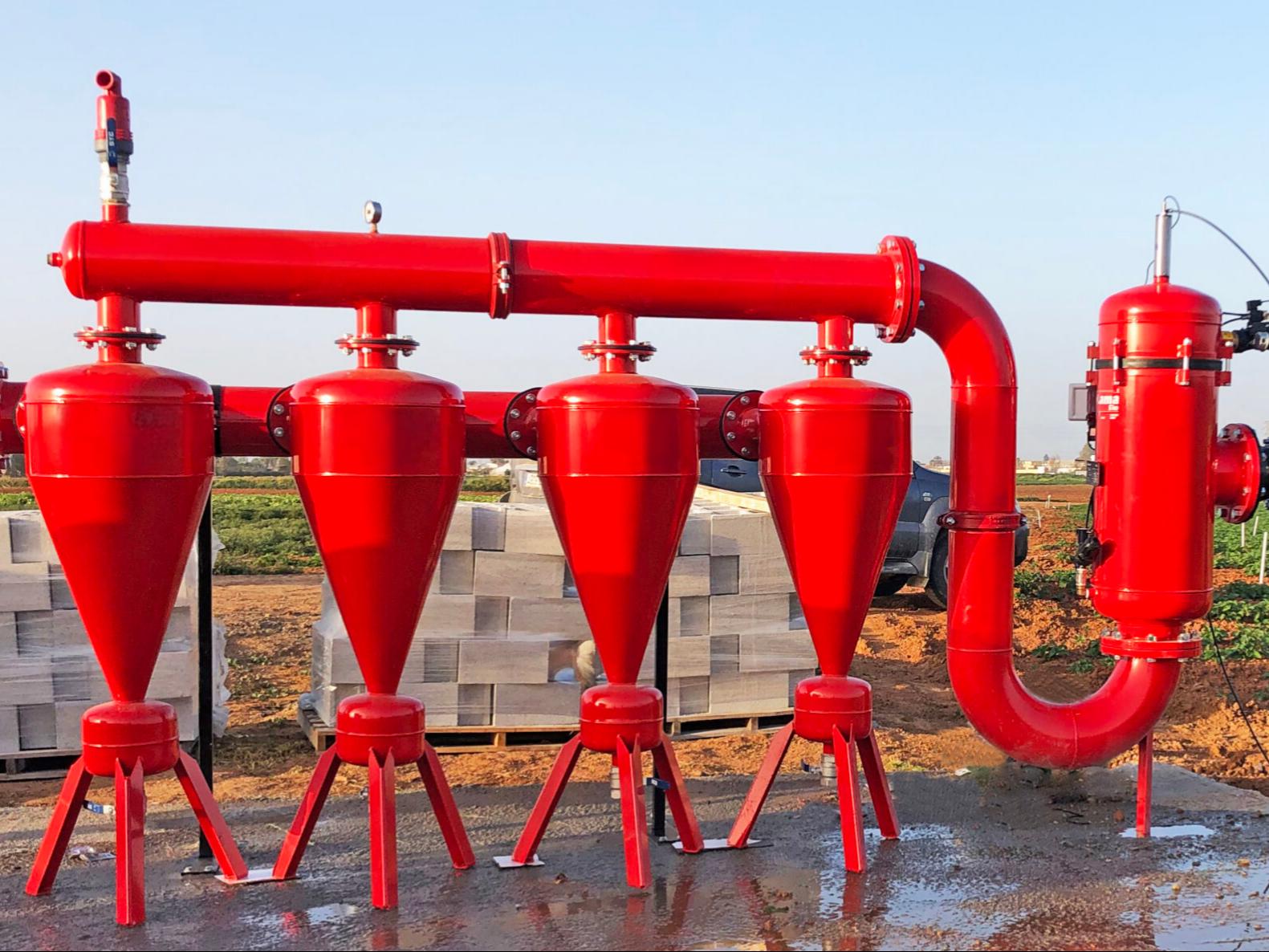
Hydro-cyclone is a kind of equipment for classifying the ore pulp by use of centrifugal force . It has no motion and dynamic parts,and needs to be matched with corresponding slurry pump. lt is mainly used in ore dressing industry for classifying,de-watering and de-sliming.
FEATURES
1 . Simple structure, easy installation and operation .
2 . Small size and floor area, easy to transport.
3 . Larger capacity with lower cost.
4 . Finer partition size and high classifying efficiency.
5 . More powerful an d efficient combined unit can be selected by connecting several units of cyclone in parallel or in series.
6 . Alternative Automation control system.
7 . Polyurethane wear-resisting material to make the life-span longer.
| Model | Feed Inlet (mm) | Sand Discharge Port (mm) | Cone Angle (°) |
Overflow particle size (mm) | Pulp Concentration (%) | Pulp Handling Capacity (m³/h) | Overall Dimensions (L×W×H) (mm) |
| Φ125 | 25×10 | Φ15-30 | 20 | 0.025~0.25 | 50-60 | 2.4-15 | 320×260×646 |
| Φ150 | 45×20 | Φ12, Φ17 | 20 | 0.025~0.25 | 50-60 | 4.8-54 | 612.5×380×899 |
| Φ250 | 50×20 | Φ25 | 20 | 0.025~0.25 | 50-60 | 6.5-61.2 | 570×540×1172 |
| Φ300 | 45×60 | Φ50 | 20 | 0.025~0.25 | 50-60 | 24-60 | 575×550×1172 |
| Φ350 | 80×35 | Φ25 | 20 | 0.025~0.25 | 50-60 | 24-90 | 695×690×1510 |
| Φ500 | 140×20 | Φ17-68 | 20 | 0.025~0.25 | 50-60 | 24-108 | 1370×775×2170 |
Working principle
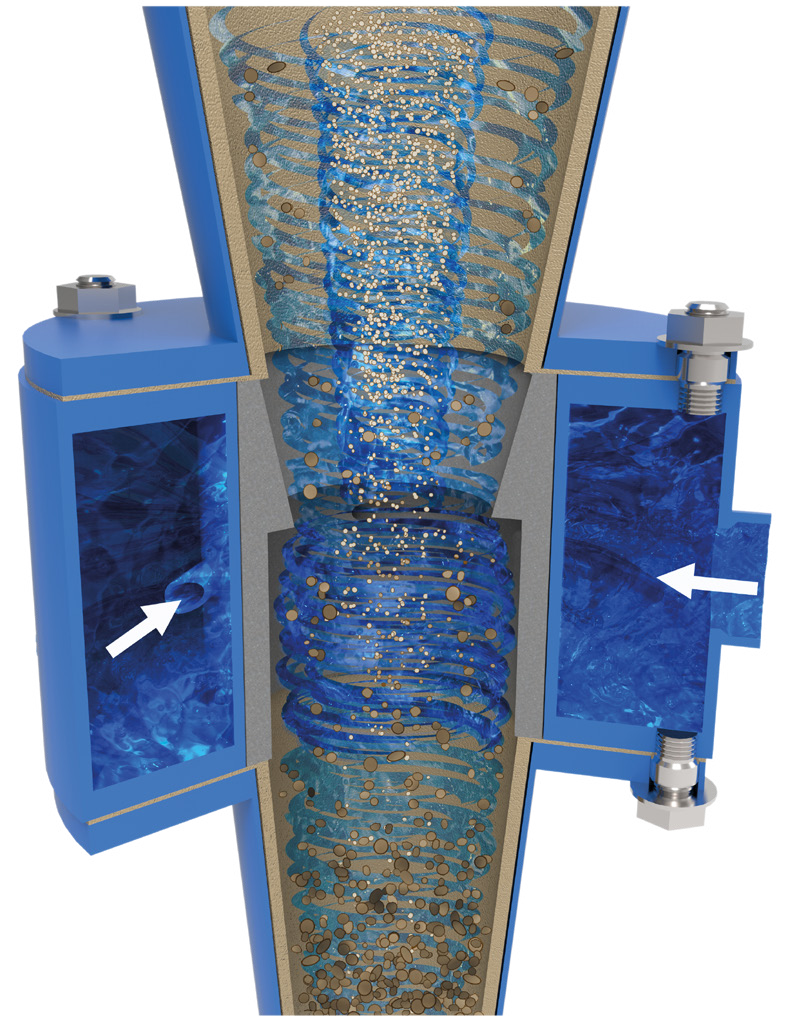
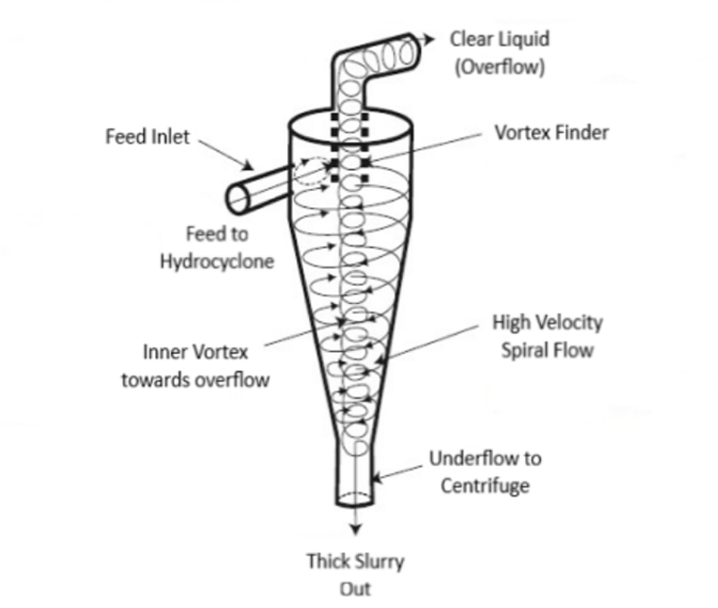
Fluid carries the suspended particles, enters the hydrocyclone tangentially, spirals downward and produces a centrifugal field in free vortex flow. Larger particles then move to the outside of the hydrocyclone in a spiral motion and due to the fraction, the liquid goes out through the spigot. Due to the limited area of the spigot, an inner vortex, rotating in the same direction as the outer vortex but flowing upward, is established and leaves the hydrocyclone through the vortex finder, carrying most of the liquid and finer particles with it.


Cyclones are composed of four main components: the feed chamber, the cone (body), the underflow (spigot liner or apex), and the overflow (vortex finder). The feed chamber directs the slurry into a spiral flow, generating a vortex. The cone (body), which can be a single piece or multiple pieces, allows the material to continue to spiral, generating a centripetal force that pushes coarse material outwards, allowing fine particles and most of the water to move upward in a vortex.