relevant cases
View more cases
Hebei Construction Waste Treatment Project
发布时间:2026-01-12
- Industry:
- Region:
TEL
13373916823
Customer Case Details
Efficient Sorting: How to efficiently and cleanly separate recyclable concrete and brick aggregates from mixed materials, and remove lightweight debris and harmful substances.
Aggregate Quality Improvement: How to process the sorted recycled aggregates into high-quality products with good particle shape and high cleanliness, meeting downstream application standards.
Operational Flexibility: How to adapt to the characteristics of dispersed treatment sites and short project cycles, reducing material transportation costs.
Configuration Options:
Fixed Plant: Suitable for centralized waste treatment centers and large-scale circular economy industrial parks, with large capacity and complete systems, and can integrate environmental protection facilities such as dust suppression, noise reduction, and water recycling.
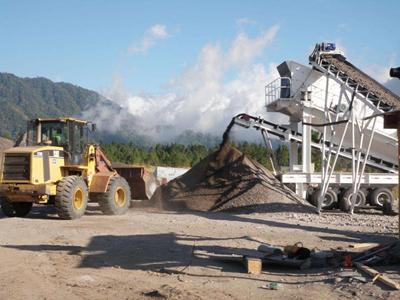
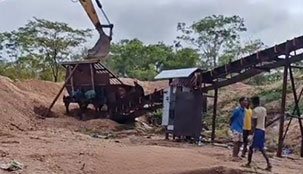
Mobile Combination: Using a combination of mobile crushing stations, mobile screening stations, and mobile air separators to form a "mobile processing workshop," which can go directly to the demolition site for on-site processing, greatly saving transportation costs. This is the current mainstream trend.
This solution transforms construction waste from an "urban burden" into "urban resources." It is particularly suitable for:
Urban Renewal and Demolition Projects: On-site processing reduces external transportation and landfilling, achieving a "demolition-construction cycle."
Construction Waste Resource Utilization Centers: Municipal facilities for large-scale and standardized treatment of regional construction waste.
Green Building Materials Production Bases: Providing stable and high-quality raw materials for brick making and recycled concrete production.
Temporary Treatment for Major Projects: Such as highway and railway reconstruction, where old road base materials can be processed on-site and used for new road construction.
Related Products
View more products