relevant cases
View more cases
500 t/d Molybdenum-Tungsten Ore Beneficiation Project
发布时间:2026-01-13
- Industry:
- Region:Shandong
TEL
13373916823
Customer Case Details
The original beneficiation plant used small-scale crushing equipment and a two-stage open-circuit crushing process in the crushing stage. The crushed product had a coarse particle size, failing to meet the energy-saving principle of "more crushing, less grinding." The grinding stage used a ball mill and a single-spiral classifier in a single-stage closed-circuit grinding process, resulting in a grinding fineness of 92% passing -200 mesh. This led to excessive grinding energy consumption and affected the beneficiation indicators. The final molybdenum concentrate grade was 39.58%, which, based on production practices with similar ores, was considered low.
After modification: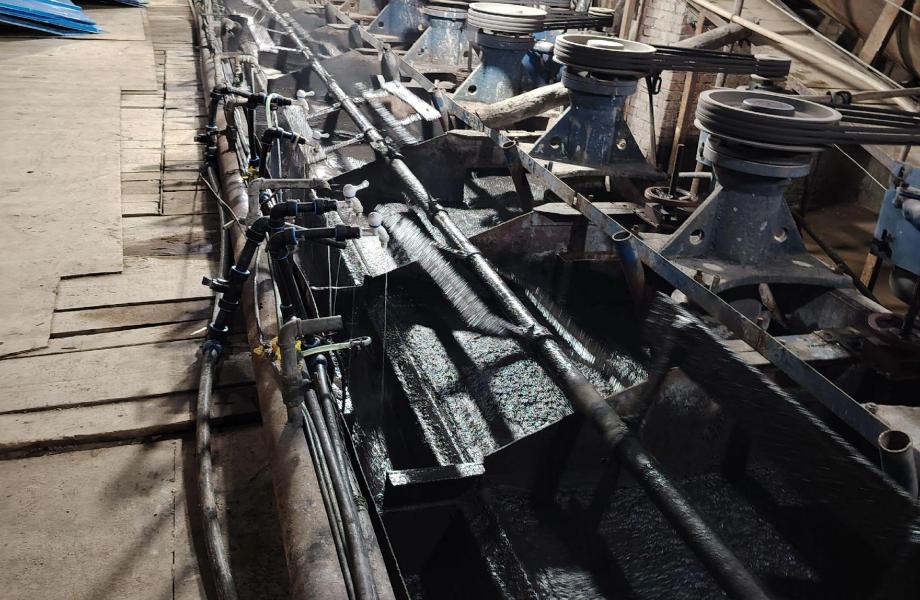
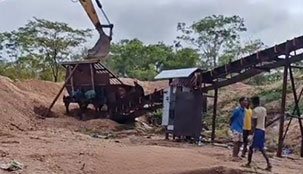
Crushing and screening stage: The raw ore is fed by a vibrating feeder to a jaw crusher for coarse crushing. The coarse crushed product is transported by a conveyor belt to the fine ore bin. The final crushed product particle size is ≤150mm.
Grinding and classification stage: A two-stage grinding process is used. The first stage uses an autogenous mill. The grinding product is classified by a linear screen. The oversized material is returned to the autogenous mill for further grinding, forming a single-stage closed-circuit grinding process. The undersized material is pumped to a hydrocyclone for classification. The underflow enters a grate-type ball mill to form the second stage of closed-circuit grinding, while the overflow flows by gravity to the flotation operation. The final grinding fineness is approximately 65% passing -200 mesh.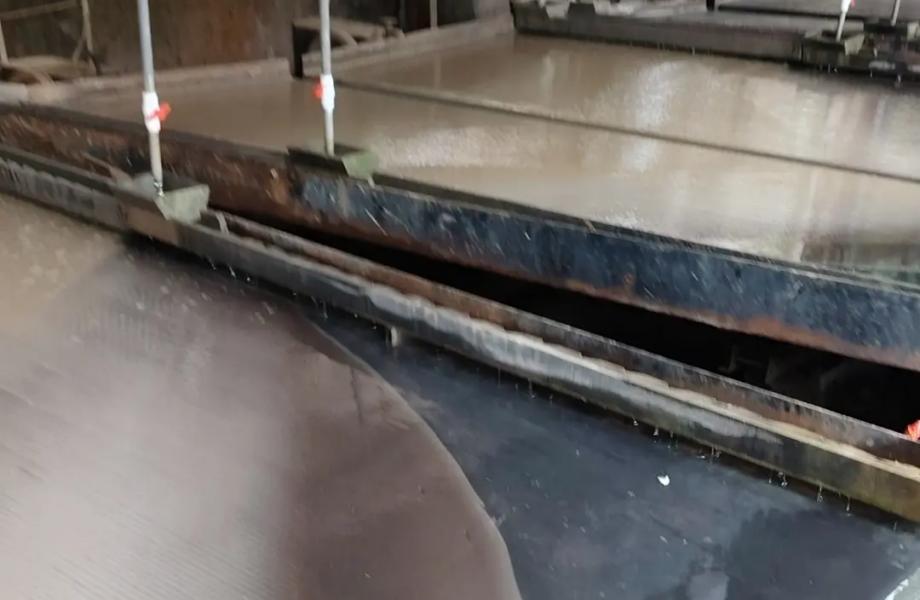
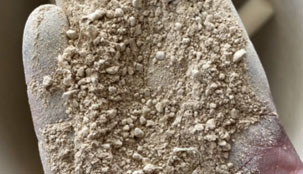
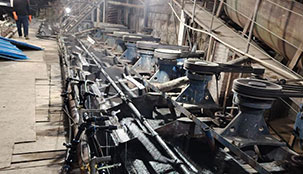
Flotation stage: A process of preferential flotation of molybdenite followed by tungsten flotation is used. The molybdenum roughing and scavenging operation uses a one-roughing, two-cleaning, and two-scavenging flotation process. The molybdenum scavenging tailings flow by gravity to the tungsten flotation system. The molybdenum cleaning operation uses a seven-stage cleaning flotation process. The tailings are returned to the previous stage, and the concentrate enters the dewatering system. Tungsten flotation uses a two-roughing, four-scavenging flotation process. The flotation tailings are pumped to the tailings pond, and the rough concentrate is pumped to a deep cone thickener. After thickening, it undergoes high-temperature dewatering. The tungsten beneficiation process employs a five-stage concentration and two-stage scavenging process. The concentrated and de-dusted pulp is returned to the tungsten beneficiation operation. The resulting tungsten concentrate is sent to the dewatering system, and the tungsten tailings are returned to the scavenging flotation stage III. The concentrate dewatering stage uses a two-stage mechanical drying process. The flotation molybdenum concentrate is pumped into a deep cone thickener for concentration, then enters an automatic hydraulic box filter press for dewatering. The filtrate is returned to the molybdenum beneficiation operation, and the filter cake is transported to a powder dryer for drying. After drying, the molybdenum concentrate has a moisture content of ≤4%. The flotation tungsten concentrate is pumped into a deep cone thickener for concentration, then enters an automatic hydraulic box filter press for dewatering. The filtrate is returned to the tungsten beneficiation operation, and the filter cake is stockpiled in the concentrate storage.
Related Products
View more products