relevant cases
View more cases
Mongolia 1000 tpd Gold Mine Ore Dressing Project
发布时间:2026-01-13
- Industry:
- Region:
TEL
13373916823
Customer Case Details
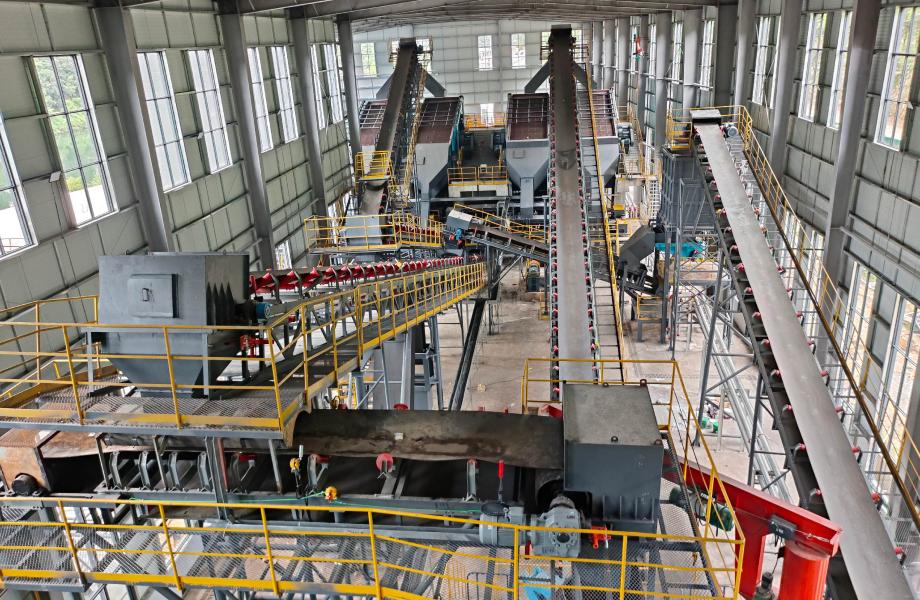
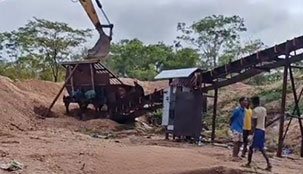
Crushing and Screening Stage: Three-stage closed-circuit crushing and screening process. Jaw crushers are used for primary crushing. After primary crushing, the material is transported by belt conveyor to a circular vibrating screen for screening I. The oversized material (+30mm) from the upper screen enters another jaw crusher for secondary crushing; the material from the second screen (15-30mm) and the third screen (8-15mm) are transported by belt conveyor to a buffer ore bin and then fed into a cone crusher by a vibrating feeder for fine crushing II. The fine crushing II product and the secondary crushing product are sent to a circular vibrating screen by a belt conveyor for screening II. The oversized material (+8mm) enters a rod screen for further screening. The oversized material (+20mm) enters a crusher for fine crushing I. The product and the undersized material from the rod screen (8-20mm) are transported by belt conveyor to the buffer ore bin before fine crushing II, forming a closed circuit. The undersized material (-8mm) from the lowest screen of screening I and screening II is the qualified material for the crushing and screening stage.
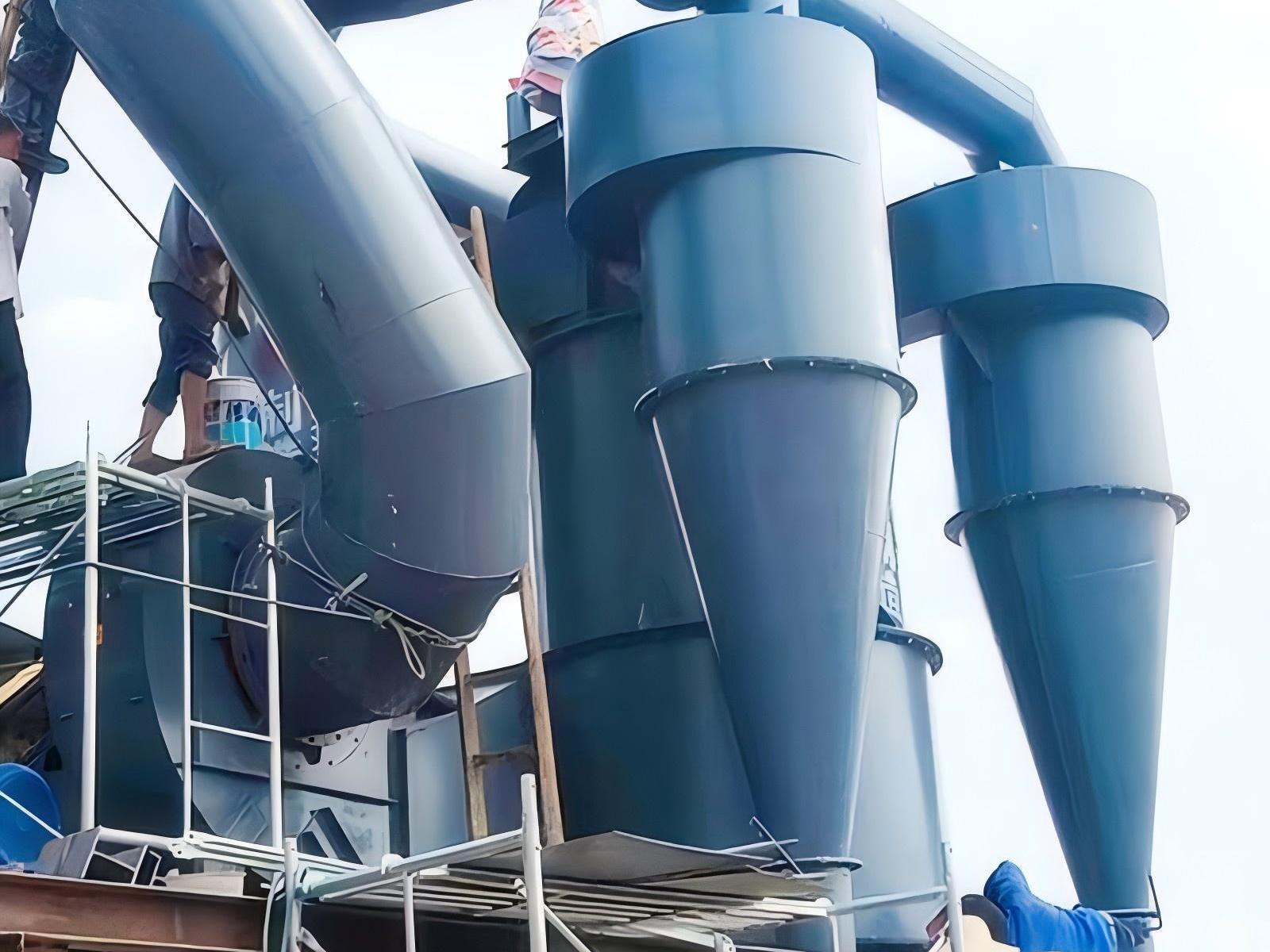
Grinding and Classification Stage: Two-stage closed-circuit grinding process. The crushed ore is transported by belt conveyor to a wet energy-saving overflow ball mill for the first stage of grinding. The undersized slurry (-3mm) is pumped into a hydrocyclone for the first stage of classification. The underflow returns to the ball mill for regrinding, forming the first stage closed-circuit grinding.
Separation Stage:
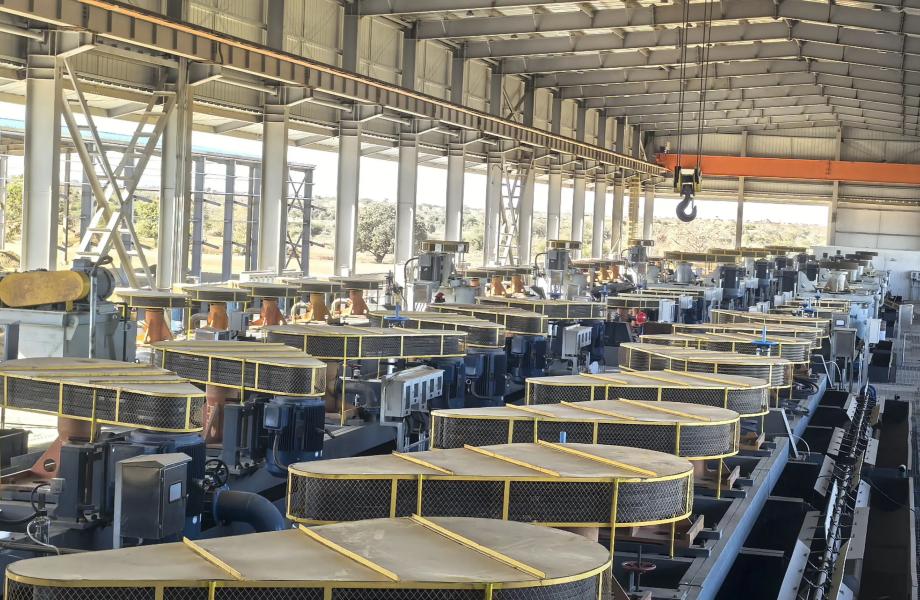
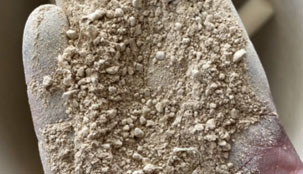
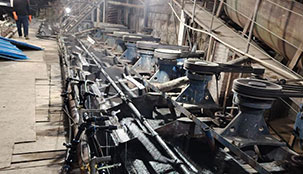
Gravity Separation: The overflow from the first stage classification flows by gravity into the existing centrifuge for gravity separation. The concentrate and the concentrate from the centrifuge in another set of existing two-stage grinding-gravity separation equipment are fed into a shaking table for fine separation. The fine separation concentrate is granular gold, which can be directly smelted; the fine separation tailings and the centrifuge tailings enter a pump box together, and are pumped into a hydrocyclone for the second stage of classification. The underflow and the oversized material from the cylindrical screen in the first stage closed-circuit grinding flow by gravity into a wet energy-saving overflow ball mill for the second stage of grinding. The product returns to the aforementioned pump box, forming the second stage closed-circuit grinding. Leaching: The second stage of classified overflow is passed through a linear vibrating screen (chip removal screen) to remove wood chips, and then flows by gravity to the existing thickener for pre-leaching concentration. The overflow can be reused as return water in the system. The thickener underflow (concentration of approximately 40-45%) is pumped to the leaching tanks to begin the cyanide leaching process. To facilitate slurry flow, the preceding leaching tank is installed at a higher elevation than the subsequent tank. Sodium cyanide solution flows into several leaching tanks, and activated carbon is added to the last leaching tank. After the activated carbon adsorbs the gold, it is lifted by an air lift pump to the preceding leaching tank. The gold-bearing activated carbon is separated by a carbon separation screen, and the slurry returns to the #2 leaching tank. The gold-bearing activated carbon is then subjected to desorption and electrolysis to obtain gold mud.
Desorption, Electrolysis, and Smelting: The gold-bearing activated carbon is sent to the desorption and electrolysis system, operating at a temperature of approximately 150 degrees Celsius and a pressure of approximately 0.5 MPa. Gold mud can be produced in just 12-15 hours. The gold mud produced by electrolysis enters the smelting stage to obtain gold ingots.
Tailings Dewatering Stage: After leaching, the slurry is separated from fine gold-bearing activated carbon by a safety screen, and then alternately pumped to the filter press by a slurry pump. The filtered tailings are transported to the tailings storage area by a belt conveyor. The filtrate is treated with bleaching powder in a wastewater buffer tank and then pumped back to the elevated water tank or directly back into the system for recycling.
Related Products
View more products